
Rolex loses market share as investor hysteria fades
Featured
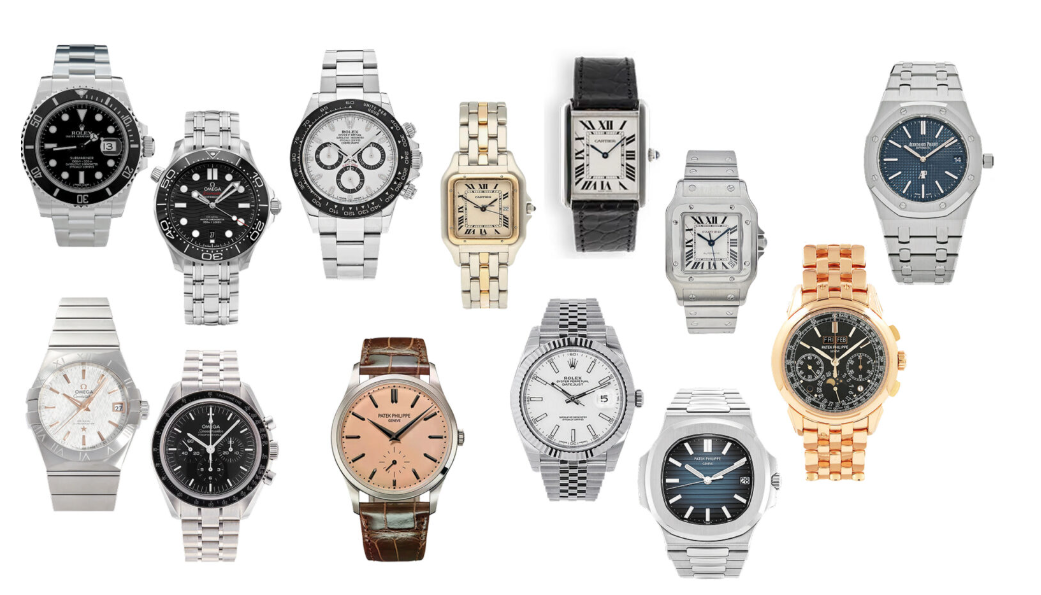 Rolex remains the undeniable market leader by volume, but 2025 brought a necessary normalisation and the brand’s share of secondary market sales dipped by 3.3%, according to a review of 2025 by pre-owned trading platform Chrono24.
The report suggests Rolex’s performance is a healthy indicator that the frantic flipping of earlier years has subsided.
“However, the brand proved it still dictates industry conversation,” Chrono24 says. “The launch of the Land-Dweller collection immediately triggered search spikes, proving that mechanical innovation, rather than mere colour updates, is what activates the core collector base.”
Shifting demand to more dressy styles may also have limited Rolex’s appeal, which was never more dominant than when its Submariner, GMT Master and Daytona reined supreme in the luxury sports watch market.
2025 was more about “Dressy” aesthetics outperforming sport models, with sales of rectangular cased watches up 9.3% and Champagne dials rising 7.9% on Chrono24.
“Based on data from millions of transactions, the report confirms a decisive shift in collector’s focus: While sport models remain a volume pillar, the dynamic growth is moving beyond the pure tool-watch aesthetic toward sophisticated, elegant design,” the company says.

Balazs Ferenczi, Head of Brand Engagement at Chrono24
Balazs Ferenczi, head of brand engagement at Chrono24 says the numbers tell a clear story: “The ‘Tourist Investor’ has left, and the ‘True Collector’ is back in charge. We see this in the data, a 13% jump for Vacheron or a 9% rise in rectangular watches happens because enthusiasts are refining their tastes, not chasing quick flips,” he suggests.
“Looking ahead to 2026, we expect this to deepen. The trend is moving back to wearable sizes and vintage influences, but with a twist: collectors are showing more confidence in bold colors and alternative materials. Furthermore, sustainability is no longer just a ‘nice to have.’ Whether it’s recycled materials or supply chain transparency, ethical standards are becoming a baseline expectation, especially for the younger generation entering the market,” he concludes.
Other key findings:
Elevated elegance
 Vintage Cartier was a the heart of a trend towards dressier watches.
In 2025, collectors moved away from the “bigger is better” trend. The data shows a clear preference for refinement over ruggedness.
Shape Matters: Demand for rectangular case shapes increased by 9.3% compared to 2024, challenging the ubiquity of round designs.
Color Palette Shift: While standard blue and black dials remained flat, “jewelry-adjacent” colors surged. Green dials (+9.5%), Champagne (+7.9%), and Gold (+6.5%) were the fastest-growing attributes, indicating watches are increasingly viewed as style statements.
Classic Complications: The moon phase saw a 15.3% surge in popularity – a clear sign that mechanical details are once again being valued for their aesthetic appeal rather than just pure functionality.
The “Dress” Anchor: Cartier capitalised on this trend with 8.3% YoY growth, driven not by new releases, but by sustained demand for the classic Santos and Tank silhouettes.
Winners in High-End & Mid-Luxury
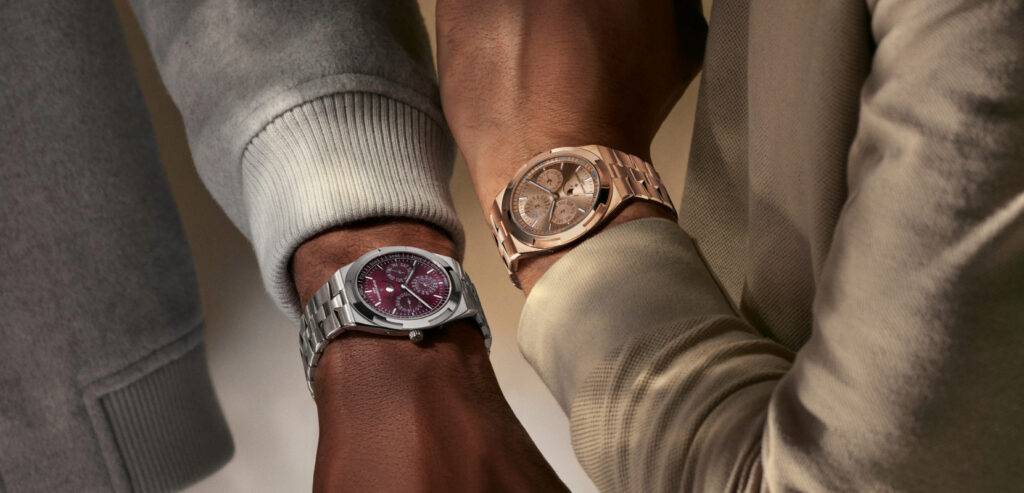 Vacheron Constantin Overseas Perpetual Calendar Ultra-Thin watch.
While the broader market stabilized, specific heritage brands saw double-digit breakouts:
High-End Winner: Vacheron Constantin outperformed its “Holy Trinity” rivals Patek Philippe and Audemars Piguet with a 13.4% growth in market share.
The Overseas collection alone surged by 17.3%, successfully capturing the demand for versatile luxury.
Comeback of the Year: IWC recorded a 14.4% increase, largely fuelled by increases in sales of its Pilot’s watches, up 10.0%, and Ingenieur’s, up 90.9%.
This double-digit swing suggests a renewed appreciation for engineering-focused heritage brands that offer availability without excessive premiums.
The Consistent Performer: Tudor continued its expansion with 8.7% growth, validating its strategy with the Black Bay line as the go-to option in the <$5k segment.
US versus Europe
Despite global economic headwinds, the secondary market demonstrated low correlation to volatile equities.
United States: The strongest region globally. Average transaction prices on the US market climbed by 8.43% (Q4 2024 vs. Q4 2025).
Europe: Showed conservative stability with a 0.28% price development (Euro basis).