
New Customs Requirements for Diamond Imports: What We Know
Featured
Washington, D.C.—Beginning sometime in April, U.S. Customs and Border Protection (CBP) will require companies importing diamonds into the United States to provide additional information and be more specific about the source of their stones.
Instead of just certifying that their diamonds did not come from Russia, importers will be asked to list the country in which they were mined.
The new requirement is part of the broader efforts the United States and other G-7 nations collectively began taking last spring to prevent Russian diamonds from crossing their borders.
Since March 1, 2024, companies or individuals importing loose polished natural diamonds weighing 1 carat or more into the U.S. have had to self-certify that the diamonds were not mined or manufactured in Russia.
The rules expanded to include finished jewelry and diamonds weighing 0.5 carats and above on Sept. 1.
What this requires of importers is filing a PDF on official company letterhead with the following statement, “I certify that the non-industrial diamonds in this shipment were not mined, extracted, produced, or manufactured wholly or in part in the Russian Federation, notwithstanding whether such diamonds have been substantially transformed into other products outside of the Russian Federation.”
Beginning in April, there will be a new field for “country of mining” in the Automated Customs Environment (ACE) manifest that importers will have to fill out, said JVC President, CEO and General Counsel Sara Yood.
They also can upload documents to support their country-of-mining claims, though CBP is not requiring additional documentation at this time.
In a member alert circulated last week, JVC said that CBP has listed “purchase orders, certificates of mining and certificates of origin” as acceptable forms of proof of country of mining.
While CBP has not provided specifics, it is presumed this means documents such as a Kimberley Process certificate or a certificate from the G-7 verification “node” in Antwerp or the pending one in Botswana.
Yood said if such documentation is not filed at time of import, it can be presented later if a shipment is spot-checked, meaning that customs pulls it and asks for additional documentation.
JVC also noted that more than one country of mining can be declared on an entry, but each one will require a separate line and its own documentation for verification.
CBP’s January Trade User Information Notice on the new country-of-mining requirement took many in the industry by surprise, though the organization had indicated back in the fall that requiring certification of country of mining was a possibility.
In October, CBP put a notice in the Federal Register, the daily journal where the U.S. government posts proposed rules and public notices, asking for comment on these changes, but few in the industry saw it.
Yood said her organization was made aware of the notice and drafted a comment on the proposal that CBP, “seems to have ignored.”
What We Don’t Know
While CBP has clarified some points of its new country-of-mining requirement since posting the notice in January, there are still a few outstanding questions.
It is not explicitly stated what size of goods will have to meet the new requirement.
However, since the sanctions on Russian diamonds apply only to diamonds that are 0.5 carats or larger, it is assumed this same size range will apply for certifying country of mining.
It is not expected that diamond importers will have to certify country of mining for goods that are smaller than half a carat.
CBP also has said it will begin collecting this additional information in April 2025, but did not provide an exact date.
Yood said JVC is recommending importers prepare for April 1, just to be safe.
The agency also has not addressed the issue of so-called legacy (or “grandfathered”) diamonds, meaning stones that were exported from Russia before March 1, 2024, the day the G-7’s ban on Russian diamonds went into effect.
The Office of Foreign Asset Controls announced in August that it has issued two licenses, General License 103 and General License 104, allowing diamonds that were out of Russia before that date to be imported into the U.S.
Companies importing goods under these licenses also are asked to self-certify using specific language, but it is unclear at this time if they also will be asked to provide country of mining information.
Diamond importers and others with questions about CBP’s new country-of-mining requirements can send them to JVC at info@jvclegal.com, as the organization will continue to collate questions and bring them to CBP, or can email CBP directly at kpmailbox@cbp.dhs.gov.
On Feb. 28 from 1-2 p.m. Eastern, JVC is holding a members-only virtual compliance briefing where it will be discussing country-of-mining requirements, among other issues.
Recommended products
-
Timeless Classic Diamond Watch
DetailsEmbraces the richness of chocolate-toned metal, making a bold statement o…
0 reviews
Fashion accessories Only a few left -
Freesia Ring with Curved Versailles Diamond Ring
Freesia Ring with Curved Versailles Diamond RingThe gently tapering ba…
0 reviews
Loose Diamond & White Diamond -
Stevie Ring Sterling Silver
This chain-link ring does what Stevie does best: turns up, stands out, and plays…
0 reviews
Men's Wedding Bands Only a few left -
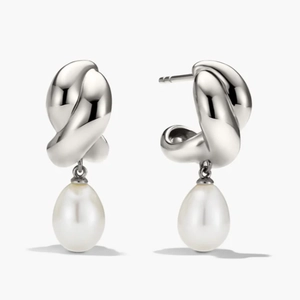
Brioche Pearl Drop Earring Sterling Silver, Pearl
Our beloved Brioche Hoops just got sweeter—now with a pearl drop charm attached …
0 reviews
Minimalist Jewelry Only a few left