Lightbox's recent design collaboration has brought greater imagination space to cultivate the diamond industry
Featured
According to a report by Forbes last night, Lightbox, a diamond retail brand under De Beers, has opened a partnership with the two brands, bringing greater imagination to the diamond retail industry.
These two brands are Roseate and The Future Rocks, respectively. The former is located in New York and mainly deals in pearl and mother shellfish jewelry; The latter is the cultivation of diamond brands invested by Zhou Shengsheng, which we introduced in our article last March.
Lightbox CEO Antoine Borde described the collaboration as "design driven partnerships" and "a first for Lightbox" in her statement, stating that it will help Lightbox "expand its product range, retail visibility, and customer engagement.".
Some comments suggest that this is a certain definition of the future development direction of Lightbox and a high affirmation of the two cooperating brands.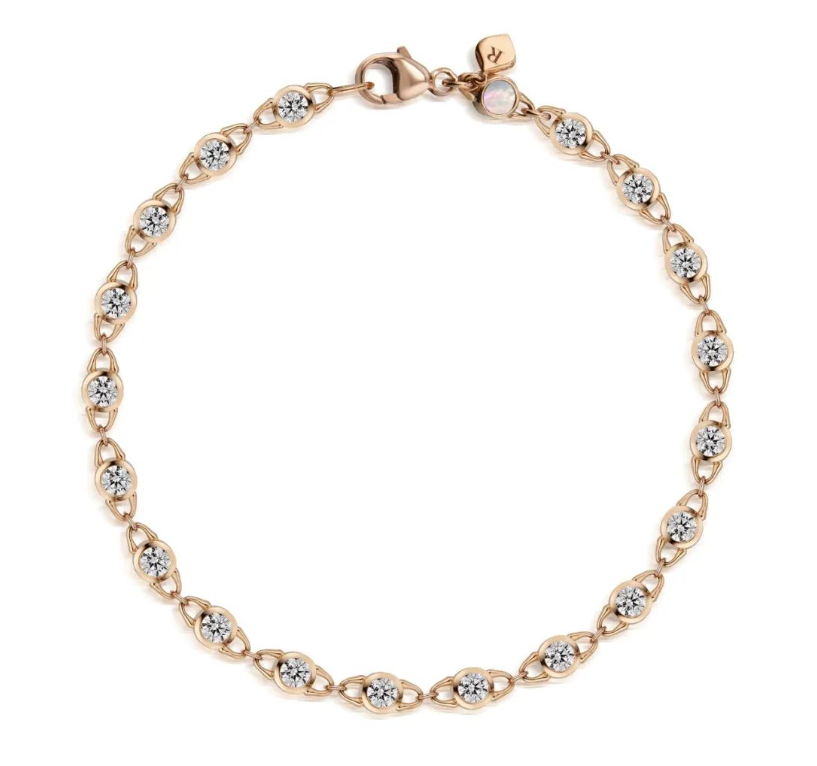
What kind of brand is Roseate?
Roseate is a very young brand with a strong sense of product design, which may be related to the experience of its founder Pamela Cloud——
Pamela worked at Tiffany for 26 years (1994-2020), rising from a "clock buyer" to a "senior vice president" and "chief merchandise officer", and was a successful worker.
In 2021, she joined the nurturing diamond company called Aether Diamonds. Coincidentally, we also discussed the concept of "carbon negative emissions" proposed by this company in our March 2021 article.
At the same time, Pamela also joined Rosecut and Tiary in the same year, working in jewelry design, strategy, and other areas.
In 2022, Pamela founded Roseate Jewelry.
Pamela is very concerned about the "traceability" of her products, and has once said "Traceability is a parallel" to express her emphasis on sustainable brand development. One of the foundations of this collaboration with Lightbox is the emphasis on the fact that the cultivated diamond products provided by the latter are completely traceable.
Forbes mentioned in the report two products they collaborated on. The necklace named Treasurelock in the following picture uses a total weight of 3.5 carats of cultivated diamonds (0.25ct x 14 pieces, supplied by Lightbox), paired with a 4mm diameter mother shell, set in 18K rose gold, and priced at 36000 yuan on the official website.
There is also a "key shaped pendant" (as shown below) called "Light Wand". It uses two cultivated diamonds (0.10ct x1, 0.25ct x1) paired with Western Australian mother shells, made of 18K gold inlay, with an official website price equivalent to approximately 11700 yuan.
A few words about The Future Rocks
Industry friends should not feel unfamiliar with this brand, after all, it is backed by the well-known Chow Sang Sang Group. The news of "Zhou Shengsheng entering the company to cultivate diamonds" in March last year sparked a lot of discussion in the industry, and we also mentioned this brand in our article at that time.
From our perspective, although Legally The Future Rocks belong to Chow Sang Sang, they use different marketing networks. Therefore, we can even believe that The Future Rocks is an independent diamond cultivation brand.
In Zhou Shengsheng's latest financial report, only one paragraph mentioned The Future Rocks:
In short, the collaboration launched by Lightbox is positive news for cultivating the diamond industry. In this industry, some people use low prices as a selling point in order to obtain as much sales as possible; Some people prioritize design and branding as their core competencies, thereby gaining more added value and profits. These are all choices made by the merchants themselves, and we have no right to interfere, let alone define their strengths and weaknesses.
In fact, the natural diamond industry is also in a similar state.
However, from a media perspective, besides promoting that "cultivating diamonds is becoming cheaper", is it also necessary to emphasize the importance of brand power, design power, and marketing power?
If we truly agree with "industry transparency", then we should not only focus on discussing wholesale prices of materials, but also allow consumers to understand more content from different perspectives, such as what brands are doing, what designers are doing, what aesthetic trends and perspectives, and so on.
Industry competition is a fact, but competition is not the only one. What this industry needs to consider is how to open up the market, or even create it, rather than every industry insider waking up in the morning thinking "whether to lower the price a bit more".
If we only have "scrolls" in our eyes, and the media only likes to gain traffic through talking about "scrolls", this is truly sad.