
Cultivating Diamonds: Making Diamonds an "Affordable Luxury"
Featured
Is cultivating diamonds a real diamond?
Diamonds are eternal, but there is not only one type of diamond.
According to a recent report by Forbes, LVMH Group collaborated with its luxury venture capital funds LVMH Luxury Ventures, Ragnar Crossover Fund, and More Investments to jointly invest $90 million in Lusix, an Israeli diamond cultivation company, to help the latter build a new factory using solar power in Israel this summer, "making cultivating diamonds a true luxury.
Not only LVMH, many luxury brands and jewelers have infiltrated the blue ocean of cultivating diamonds. For example, another French luxury goods giant, Chanel Group, has invested in the cultivation of the diamond brand Courbet in France. Chanel stated in a recent statement that the company invested in new companies like Courbet because of the need to "observe the evolution of trends and understand the dynamics of the technology world". However, there are currently no plans to adopt the cultivation of diamonds.
Jewellers lay out and cultivate diamonds, but at the same time draw a clear line with cultivating diamonds. This also makes cultivating diamonds face the embarrassment and controversy of identity. Is cultivating diamonds a real diamond? Can nurturing diamonds replace natural diamonds as a new symbol of love in the future?
To lighten the burden of love
Diamonds have always been endowed with the meaning of love. Since 1947, De Beers proposed the classic slogan "A diamond is forever. Subsequently, consumers are saddened by the high prices of natural diamonds, many young consumers are unable to afford them, and even jokingly say 'one diamond goes bankrupt'. However, the emergence of cultivating diamonds may change this situation.
Cultivating diamonds, as a type of artificial diamond, converts carbon elements in the form of graphite into diamonds by simulating the high-pressure and high-temperature growth environment of natural diamonds more than 100 kilometers underground. This cultivated diamond maintains consistency with natural diamonds in appearance, physical properties, and chemical properties. Therefore, cultivating diamonds is more green and environmentally friendly, avoiding the environmental damage caused by natural diamond mining, such as surface damage, carbon dioxide emissions, and significant water resource consumption.
More importantly, cultivating diamonds is a true diamond, which significantly distinguishes them from imitation diamond materials such as "Mosan diamond" and "water diamond" (also known as "zircon") on the market. According to public sources, in 1954, G.E. Company in the United States successfully developed the world's first artificial diamond; In 1963, China's first artificial fine-grained diamond was born.
Under the same conditions, the price of cultivated diamonds is about one-third of the price of natural diamonds. Therefore, the price of the same materials and advantages may indeed save the "cost of love" that young people cannot afford.
Recommended products
-
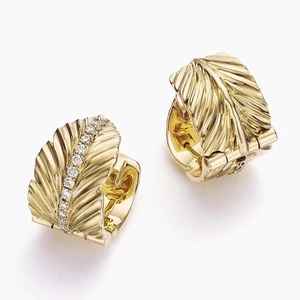
14K Yellow GoldJane Goodall Leaf Lab Diamond Huggie Earrings
0 reviews
Hot Sell -
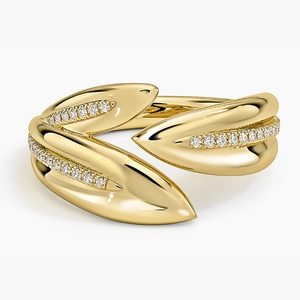
Jane Goodall Olive Branch Lab Diamond Ring (1/8 ct. tw.) in 14K Yellow Gold
0 reviews
Special Especially -
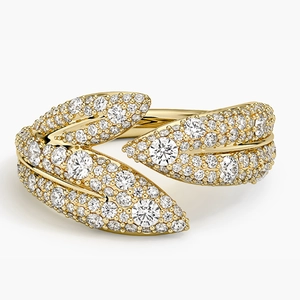
Jane Goodall Pavé Olive Branch Lab Diamond Ring (7/8 ct. tw.) in 14K Yellow Gold
0 reviews
Special Especially -
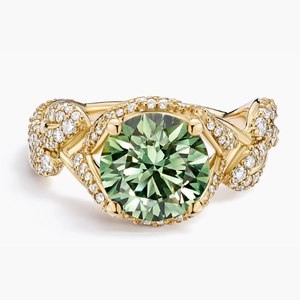
Jane Goodall Olive Branch Lab Diamond Cocktail Ring (3 3/4 ct. tw.) in 18K Yellow Gold
0 reviews
Special Especially