
One of the laboratory diamond planting methods: Why do they outperform conventional gemstones
Featured
They shine like mined gemstones and look like 'real' diamonds, but there is a key difference: gemstone mining in some parts of the world may involve unethical human rights violations, while laboratory growth or artificial diamonds do not pose a risk of supporting such behavior. A decisive factor is that consumers are constantly demanding greater transparency from companies, and a so-called "Bloody Diamond" case could lead to its infamy. Futuristic microwave technology will enable the "conflict free diamond" industry to thrive and shine brightly.
What is' conflict diamonds'?
Conflicts or illegal trading of sweaty diamonds have fueled conflicts in war-torn areas. Conflict diamonds are defined by the United Nations as "originating from areas controlled by armies/forces opposing legitimate and internationally recognized governments, and being used to fund military actions against these governments or to violate Security Council resolutions
Currently, out of every 4 diamonds sold in the world, one is a sweaty diamond.
The substitute for sweaty diamonds is laboratory grown conflict free diamonds. The diamonds grown in the laboratory are chemically, physically, optically, and visually identical to the diamonds mined.
The Beauty of Artificial Diamonds
Artificial diamonds, also known as engineering diamonds or cultivated diamonds, use advanced microwave plasma technology to grow in highly controlled laboratory environments. The conditions generated by this process allow diamonds to grow out of the excited gas phase, with a mass similar to that formed in the mantle beneath the crust. Artificial diamonds are made by arranging real carbon atoms according to the structural characteristics of diamond crystals. They are made entirely of the same material as natural diamonds, thus possessing the same optical and chemical properties, making them an excellent substitute for conflict diamonds.
Artificial Diamonds: How to Make Them?
Diamond growth through chemical vapor deposition process. Place tiny diamond fragments (diamond seeds) on silicon wafers and heat them through plasma. Plasma is the fourth state of matter and can be considered a very high-temperature gas. In fact, it is so hot that molecules and atoms are no longer the only ones present in the gas phase, but rather a "soup" containing ions and electrons, free radicals, and reactive substances that are turbid to each other.
A plasma composed of hydrogen and carbon can either dissolve diamond seeds or create an environment that allows diamond seeds to grow into larger diamonds. If this process goes wrong, the final result is only graphite, not the sparkling diamond you want.
Controllable process without the need for high voltage
In the 1980s, chemical vapor deposition (CVD) was introduced, eliminating the need for high pressure.
In a growth furnace, a hydrocarbon gas mixture is ionized by microwave energy at about 800 degrees Celsius. The molecular bonds of the gas are opened, and carbon atoms deposit on diamond seeds. First, it slowly grows into crystal microstructures
Recommended products
-
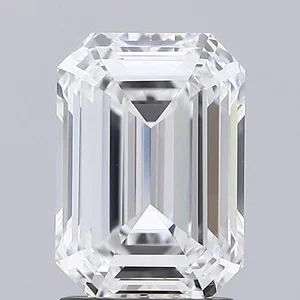
2.00 Carat Emerald Lab Created Diamond Super Ideal Cut • D Color • VVS2 Clarity
0 reviews
Loose Diamond & White Diamond -
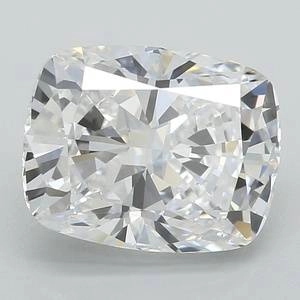
1.92 Carat Cushion Lab Created Diamond Super Ideal Cut • D Color • VS1 Clarity
0 reviews
Loose Diamond & White Diamond -
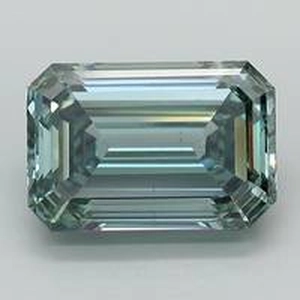
7.25 Ct. Fancy Deep Green Emerald
0 reviews
Create You Own -
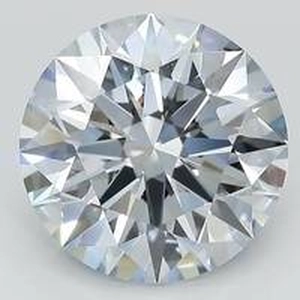
5.2 Ct. Fancy Light Blue Round
0 reviews
Create You Own