
How One Man Killed Four Retailers: Richard Baker’s Four-Act Play
Featured

Saks Global filed for Chapter 11 bankruptcy this week. The headlines will blame a weak luxury consumer, the post-merger debt load, or the slow death of department stores. But if you look at the resume of the man in charge, this is not a retail tragedy. This is the final act of a playbook that has already killed four other retailers.
Richard Baker is not a merchant. He is not a fashion person. He is a real estate tycoon whose father founded National Realty & Development Corp, and his entire career has followed a specific algorithm that repeats with almost mechanical precision. Buy a retailer with valuable real estate. Sell the flagship buildings or spin off the property assets. Load the operating company with debt. Extract the value and exit before the walls cave in.
The pattern is so consistent that calling it a pattern undersells it. This is a business model.
Act 1: Lord & Taylor
Baker acquired Lord & Taylor in 2006, and for a moment it looked like a bet on American retail heritage. It was not. In 2017, he sold the retailer’s crown jewel, its iconic Fifth Avenue flagship building, to WeWork for $850 million. The transaction was a masterclass in value extraction. Baker pulled nearly a billion dollars out of a single piece of real estate while the retail operation continued to limp along, starved of the investment it needed to compete.
Lord & Taylor filed for bankruptcy in 2020 and liquidated entirely. The building was the play and the stores were collateral damage.
Act 2: Hudson’s Bay and Zellers
Baker took control of Hudson’s Bay Company in 2008, and the Canadian department store chain became the vehicle through which he would run his playbook across multiple continents.
The first target was Zellers, the Canadian mass merchant tucked inside HBC’s portfolio. Baker did not attempt to revive the brand or reposition its stores. He sold the valuable lease agreements to Target, pocketing the real estate value while Target stumbled through one of the most disastrous international expansions in retail history. Baker got paid. Zellers ceased to exist as a major player. Target eventually fled Canada entirely.
Hudson’s Bay itself followed a slower version of the same trajectory. Baker spun off the real estate into a separate entity and extracted value from the property portfolio while the retail operation deteriorated. By early 2025, HBC announced it would liquidate all of its Canadian stores, ending more than 350 years of retail history. The flagship locations had been monetized. The stores were left to die.
Act 3: Galeria Kaufhof
Baker repeated the formula in Germany with Galeria Kaufhof, the department store chain he acquired through HBC and merged with Karstadt. He systematically stripped its real estate assets while the retail operations struggled under debt and underinvestment. The property portfolio was monetized. The retail operations eventually filed for insolvency.
Act 4: Saks and Neiman Marcus
The Saks and Neiman Marcus merger was announced in 2024 as a bold consolidation play, the creation of a luxury retail powerhouse that would have the scale to negotiate with European brands and the footprint to compete with direct-to-consumer insurgents. The reality was far less romantic.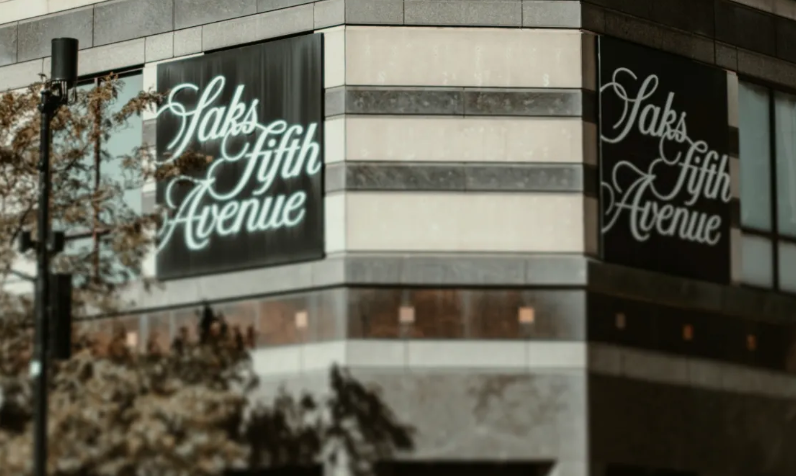
The deal loaded Saks Global with crushing debt from the start. Within months, vendors began receiving warnings about shipping product. By late 2025, the company had sold the land beneath the Neiman Marcus Beverly Hills flagship to a distressed asset specialist for roughly $100 million, a transaction that came together in seven days because Saks Global had an interest payment due at the end of the month. The real estate was being liquidated to service the debt.
This week’s bankruptcy filing reveals who financed Baker’s final act. Chanel is owed $136 million. Kering, the parent company of Gucci and Saint Laurent, is owed nearly $60 million. Richemont is owed $30 million. LVMH is owed $26 million. The list continues through dozens of brands, many of whom will receive pennies on the dollar if they receive anything at all.
These companies did not just lose money. They financed their own decline by extending credit to a retailer whose parent company was systematically extracting value from the business.
The Saks and Neiman Marcus merger was announced in 2024 as a bold consolidation play, the creation of a luxury retail powerhouse that would have the scale to negotiate with European brands and the footprint to compete with direct-to-consumer insurgents. The reality was far less romantic.
The deal loaded Saks Global with crushing debt from the start. Within months, vendors began receiving warnings about shipping product. By late 2025, the company had sold the land beneath the Neiman Marcus Beverly Hills flagship to a distressed asset specialist for roughly $100 million, a transaction that came together in seven days because Saks Global had an interest payment due at the end of the month. The real estate was being liquidated to service the debt.
This week’s bankruptcy filing reveals who financed Baker’s final act. Chanel is owed $136 million. Kering, the parent company of Gucci and Saint Laurent, is owed nearly $60 million. Richemont is owed $30 million. LVMH is owed $26 million. The list continues through dozens of brands, many of whom will receive pennies on the dollar if they receive anything at all.
These companies did not just lose money. They financed their own decline by extending credit to a retailer whose parent company was systematically extracting value from the business.
Why This Playbook Ends in Bankruptcy
When a real estate investor acquires a retailer, they are not betting on the future of selling clothes. They are betting on the arbitrage between the company’s valuation and the market value of its flagship locations. The stores are not assets to be nurtured, they are liabilities to be serviced until the real estate can be monetized.
The problem is that retail requires constant reinvestment, store experiences that justify the trip, inventory depth, visual merchandising and sales associates who understand the product. When the operating company is loaded with debt from an acquisition and the real estate is being stripped away, there is no capital left for any of those things. The stores become tired, the customers notice, and the business enters a death spiral that ends in liquidation or bankruptcy.
Baker did not fail at Saks, rather he succeeded at exactly what he has always done. The question is who got paid and who is left holding the bag.
What Brands Should Learn
The creditor list in this bankruptcy filing should be required reading for every brand executive who relies on wholesale distribution. The biggest names in luxury, companies with in-house legal teams and sophisticated financial operations, extended hundreds of millions of dollars in credit to a retailer controlled by a man whose entire career has been defined by extracting real estate value and leaving operating companies to collapse.
The lesson here is that brands cannot outsource their customer relationships to partners whose incentives are misaligned with the health of the retail operation. When a real estate investor controls your distribution partner, your receivables are not financing inventory. They are financing someone else’s exit.
The brands that will thrive in the next decade are the ones that control their own distribution, own their customer data, and treat physical retail as a brand experience rather than a wholesale channel. The Saks bankruptcy is not an indictment of physical stores but an indictment of a model where brands let aggregators hold their margins hostage while financial engineers extract the underlying real estate value.
The End of an Era
Geoffroy van Raemdonck, the former Neiman Marcus CEO who led that company through its own bankruptcy in 2020, is now tasked with restructuring Saks Global. He will close stores, renegotiate vendor terms, and attempt to build something sustainable from the wreckage. Whether he succeeds depends on whether the new financial backers are willing to invest in the retail operation rather than strip it for parts.
But the Baker era is over. And the pattern he leaves behind should serve as a permanent warning to any brand that entrusts its distribution to a partner more interested in the dirt beneath the store than the customers walking through the doors.