Rolex, Audemars Piguet and Tudor introduce new year price rises
Featured
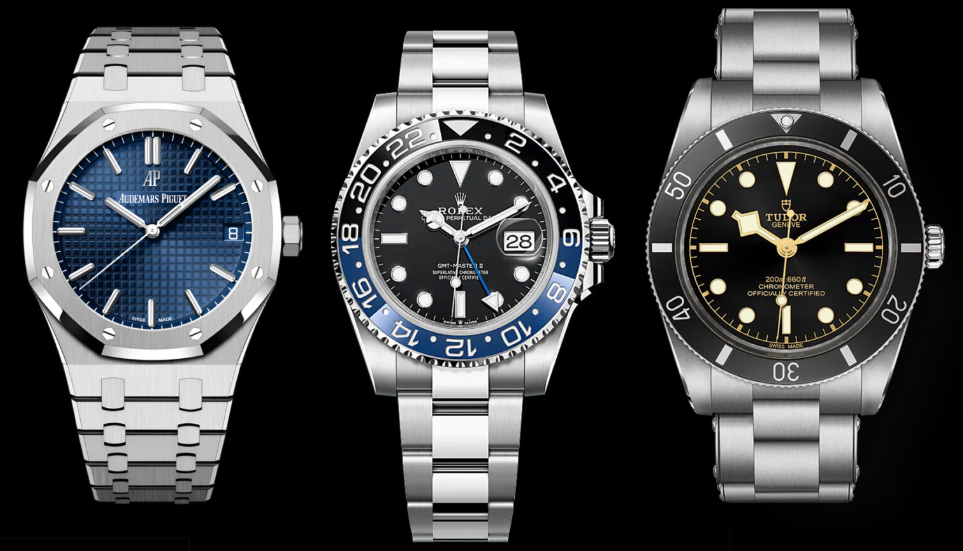
Rolex, Tudor and Audemars Piguet have all marked 2026 with new year price increases.
Rolex’s new year price rise for the UK has come in at an average of around 5%, WatchPro analysis on January 1 reveals.
The rise, which is far from untypical for the Crown in either its timing or scale, appears to be part of a worldwide adjustment that takes into account today’s record gold price, higher tariffs for the USA and a weaker US dollar.
Prices rising by an average of 5% in the UK are significantly lower than the 7% bump in the United States.
Average Rolex prices for gold watches have risen in the UK by 6.5% in our tracker while steel pieces are up by 4.1%.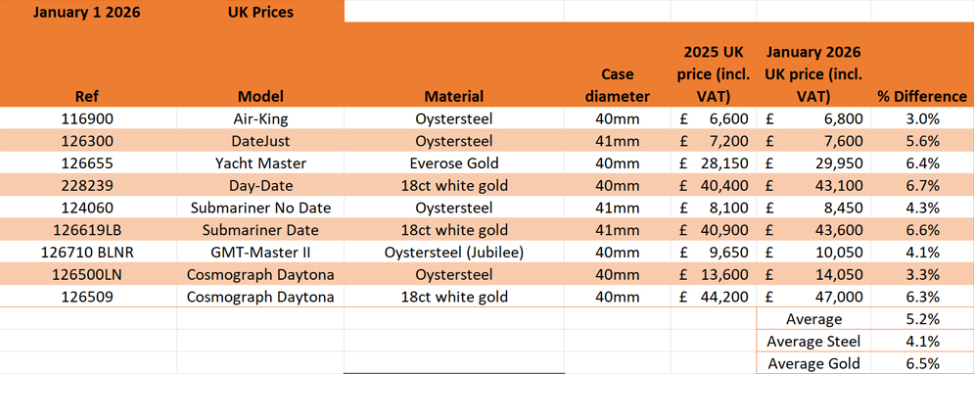
WatchPro tracks UK and USA prices for a basket of watches from ten of the biggest Swiss watchmakers.
Rolex, Tudor and Audemars Piguet have imposed significant price rises on both side of the Atlantic.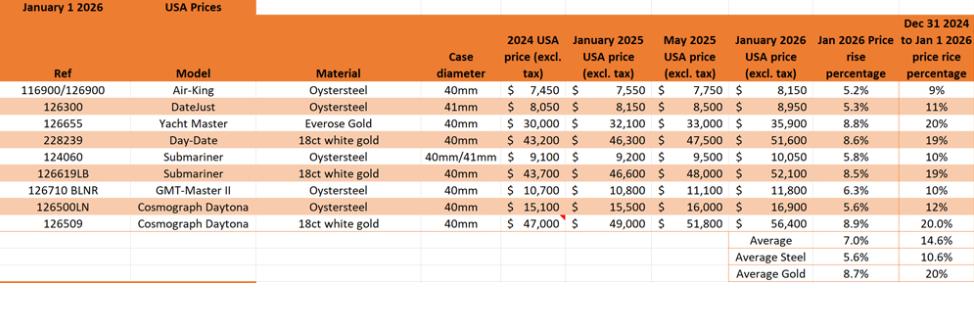
Patek Philippe, Omega, Breitling, Cartier, TAG Heuer, IWC and Vacheron Constantin prices have not changed today.
Tudor has increased prices for 2026 by an average of 5.6% in the United States and, surprisingly, by a slightly higher 5.6% in the UK.
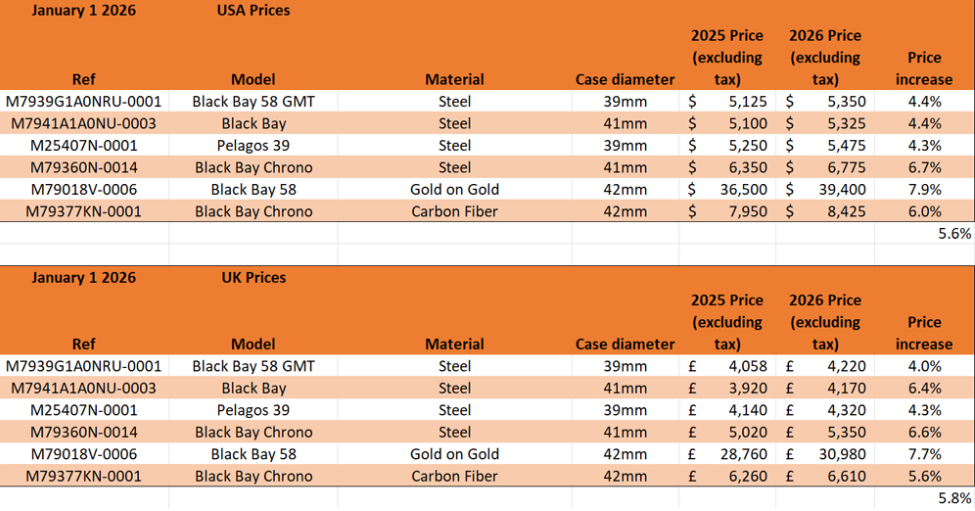
The brand makes very few all-gold watches, but a gold-on-gold Black Bay 58 has seen its price rise by 7.7% in the UK to £30,980.
The same Tudor watch in the United States saw a bump of 7.9% to $39,400, excluding taxes.
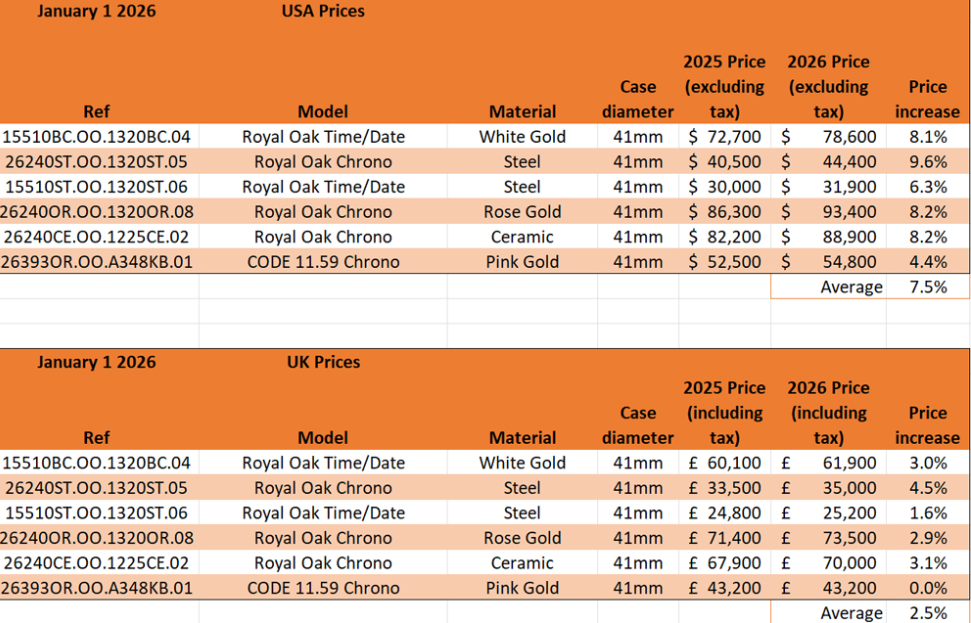
Audemars Piguet has delivered similar price rises to Rolex, with an average of 7.5% in the United States for the watches we track, and by a more modest 2.5% in the UK.
Royal Oak references have risen by considerably more than the less popular CODE 11.59 collections in both countries.
There appears to be little pattern between price rises for gold or steel; or between time-only and more complicated chronographs, which suggests the AP strategy is to increase prices most where demand is strongest and waiting lists are longest.