Love & Marriage: Changing attitudes & your jewellery store
Featured
 SAMUEL ORD takes a closer look at the evolving attitude towards marriage in Australia and what this means for independent jewellery store owners.
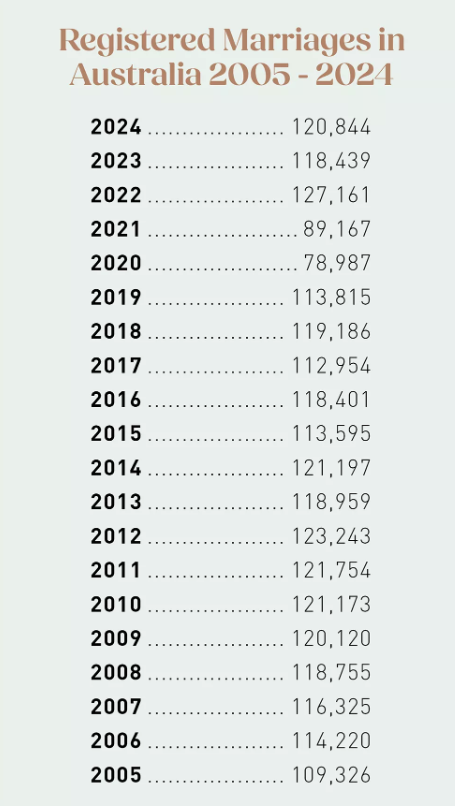
Fewer things matter more to the average jewellery store than the health of the engagement and wedding market. Indeed, engagement and bridal jewellery sales are critical to the success of so many independent jewellery businesses in Australia. Several unique factors separate the sale of engagement and bridal jewellery from the retail of other forms of jewellery. For example, an engagement ring is often the most expensive piece of jewellery a woman will wear. For men, it’s an expenditure that requires painstaking preparation, especially for those customers who, outside of a gift for a girlfriend or relative, have spent very little time, if any, inside a jewellery store. It’s not uncommon for the purchase of bridal and engagement jewellery to be the most significant final decision of a young consumer’s life. This means that the purchasing process is complex. There’s a substantial amount of money involved, and the jewellery that is selected will likely be worn for a lifetime, symbolising the most important personal relationship the consumer will experience. Earlier this year, the Australian Bureau of Statistics (ABS) released data on the marriage and divorce rates for 2024. The report found that 120,844 marriages were registered in 2024, a 2 per cent increase from the previous year. Registered marriages reached dizzying heights in 2022 (127,161); however, for obvious reasons, that was an outlier year that warrants consideration in context. Planned weddings and, by extension, marriages were repeatedly delayed during the COVID-19 pandemic lockdowns. As a result, many couples delayed their marriages until restrictions on public gatherings were lifted, leading to a surge in marriages in 2022. Beyond the raw numbers, this report had many other interesting slices of information. The increase in Australia’s population from 2005 to 2025 also needs to be taken into consideration. The report noted that in 2004, the marriage rate, measured per 1,000 residents over the age of 16, was 7.1. Twenty years later, in 2024, the rate remained at 5.5, unchanged from the previous year. Between 2005 and 2025, Australia’s population has increased by approximately 7,208,000 people, representing a rise of roughly 35.5 per cent. This may indicate that, despite the overall number of marriages and, by extension, weddings, a decreasing percentage of the population is getting married. This may be an indication of evolving attitudes towards marriage. Other interesting information included the revelation that the median age at marriage for males in 2024 was 32.8 years, a slight decrease from 32.9 years in 2023 but higher than 32.5 years in 2022. The median age at marriage for females was unchanged at 31.2 years in 2024. As an interesting aside, the report also noted that Australia’s divorce rate was 2.1, down from 2.3 in 2023. The number of divorces fell by 3 per cent from 2023 to 2024. Meanwhile, marriages lasted for a median of 13.2 years – increasing from 12.1 in 2020 and 13 last year. The Australian Institute of Family Studies reported that in February, the divorce rate had fallen to its lowest level since the implementation of the 1975 Family Law Act in 2023. The median age for men to divorce was 47.1 years, while for women it was 44.1. And, while younger couples were divorcing less, divorces in the above-60 age category were rising. Dr Jan Kabatek, a senior research fellow at the Melbourne Institute of Applied Economic and Social Research, told The Guardian the declining divorce rate reflected a more selective approach to marriage. “Fewer people are getting married, and the people who are getting married are usually the ones who are more committed, either through religion or because they are older and more experienced,” she said. “The people who might have got divorced in 2023/2024 already got divorced during Covid. If a lot of people call it quits in 2021, the couples who survive later also have longer marriage durations. Fundamentally, the pool of people who remain married has changed.”