
De Beers IPO: new hope or final collapse of the diamond market?
Featured
Reuters reports that Anglo American (AAL.L) is considering the possibility of conducting an IPO for De Beers with a listing in London. Anglo owns 85% of De Beers' shares, with 15% owned by the government of Botswana, where the largest diamond mines are located. De Beers itself is currently in a frankly poor state — its EBITDA in 2023 decreased from $1.417 billion to $72 million, and diamond sales revenue dropped to $3.6 billion from $6 billion the previous year. In February 2024, Anglo announced a $1.6 billion write-down of De Beers' book value, and today, this asset is valued by its owner at $7.6 billion. It is worth recalling that in 2011, Anglo bought 40% of De Beers' shares from the Oppenheimer family for $5.1 billion, increasing its stake to 85%. Not to mention, thirteen years ago, De Beers was valued at $12.75 billion. A 40% decline in asset value over a relatively short period is an impressive "achievement," especially considering dollar inflation.
It is difficult to determine what proportion of this "success" is due to objective problems in the diamond market and what proportion is due to errors in corporate management. However, it is clear that launching an IPO with the current figures is ineffective from a normal business perspective. Such a decision may not be driven by a desire to develop the asset but rather by a desire to offload it as quickly as possible at a low price. It is quite possible that shedding the problematic De Beers will strengthen Anglo's position in M&A negotiations, as the proceeds from the share placement will go to Anglo's balance sheet, undoubtedly making it more attractive. De Beers itself will not receive a cent for development from the IPO, and all its numerous problems will be shifted onto the shoulders of new shareholders.
It is currently unknown what portion of Anglo's De Beers shares will be used for the IPO and whether Botswana will participate in this process. But if the assumption that Anglo wants to get rid of De Beers before an upcoming M&A deal is correct, it is likely about the entire 85% stake. In this case, Botswana is unlikely to give up its share, as the administrative resources it constantly and successfully uses will more than compensate for the shares it lacks to achieve a blocking stake, ensuring the level of control over the diamond company that the African country's government requires. At the same time, for the IPO, the influence of the Botswana government on decision-making in De Beers is an obvious negative, reducing the attractiveness of the asset to potential investors, as reconciling corporate and governmental interests has repeatedly turned into painful and prolonged discussions, during which De Beers has had to yield positions multiple times.
Considering that the timing for the IPO is clearly unfavorable, any hopes that the resulting free float will increase De Beers' investment appeal seem illusory. In the 21st century, diamond companies have not had much luck on the stock market. Shares of Petra Diamonds Limited (PDLMF) have fallen nearly 100-fold since their listing on the London Stock Exchange, and shares of Gem Diamonds Limited (GMDMF) have decreased more than tenfold. ALROSA conducted its IPO on the Moscow Exchange in 2013, raising just over $1.3 billion, with the company itself receiving only $0.16 billion, which was used to pay off debt. The final offering price was ₽35 or $1.1 per share. Today, ALROSA shares are worth $0.88 each — 20% less than the initial offering price. Of course, while the reasons for the decline in the market capitalization of these companies vary, the fact that going public has not significantly increased their investment attractiveness is an established fact. It is worth noting that De Beers delisted from the Johannesburg Stock Exchange in 2001, ending its 108-year history as a public company.
The most intriguing question regarding De Beers' future is who will become the new owner of this legendary company. This mysterious figure will have to solve several non-trivial tasks that traditional diamond market players, including Anglo management, have so far failed to tackle. How can new generations of consumers be made interested in natural diamonds? How can a marketing duel be won against LGD (Lab-Grown Diamonds)? What should be done about Russian sanctioned diamonds and gems? The new owner of De Beers will have to provide constructive answers to these questions, as without such answers, the purchase simply loses its meaning—why invest in an obviously declining conservative asset when there are many attractive alternatives, from green energy to artificial intelligence?
If we accept Anglo's valuation of De Beers at $7.6 billion, then the cost of the 85% stake would be $6.46 billion. This may be somewhat inflated under current conditions, but let’s take it as a benchmark. At first glance, this is not a huge amount for control over a unique company with a historic brand. But the problem is that this amount needs to be supplemented with a marketing strategy that could "turn the chessboard," creating a diamond image radically different from the current one and more aligned with the perceptions and values of new generations who will live in an era of intensifying and accelerating conflicts of all kinds and levels — from national to ethical. The drama and conflict embedded in the history of natural diamonds and gems should become the main marketing drivers, ensuring the attraction of new consumer audiences and leveraging the natural (and only) advantage of natural diamonds over LGD, which lack such a history. Obviously, with such a development concept, the issue of "bloody Russian diamonds," as well as any "conflict" natural diamonds, is automatically resolved. Without such a radical shift in marketing paradigm, the natural diamond market will continue to be successfully cannibalized by LGD and face increasing pressure from Russian dumping.
What kind of buyer could implement such a program? It is unlikely that "luxury houses and sovereign funds from the Persian Gulf countries" would be suitable for this role. An investor with much more serious motivation is needed, and there are likely not many options. At one time, the Oppenheimer family found it possible to enter into an alliance with the USSR. It cannot be denied that this paradoxical alliance of a communist dictatorship, "the vanguard of democracy," and apartheid ensured the progressive and sustainable development of the diamond market for half a century. This is a valuable historical experience that could be relevant today. It does not matter what the nominal participants of the IPO are called, or whether they represent the Persian Gulf or the Global South; the experience of City and West East Ltd can be easily considered and creatively developed. But the ultimate beneficiary is important, for whom the very existence of the diamond market is as vital as it is for the sinking to the bottom De Beers.
Of course, the appearance of an investor affiliated with Russia at the De Beers IPO now seems unlikely, but in the past couple of years, many events previously considered so have already occurred.
Recommended products
-
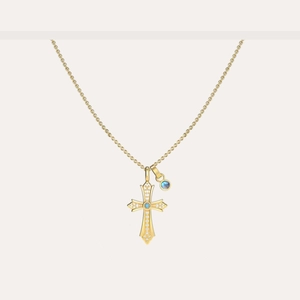
Faith Energy Cross Blue Diamond Pendant with Moonstone
DetailsThe cross is a symbol of protection, the classic shape with high-grade cu…
0 reviews
Associated Organization showcase -
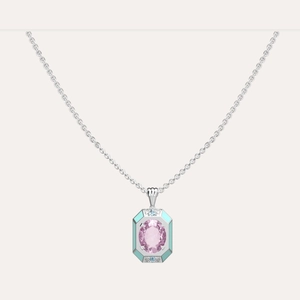
Artdeco Prism Diamond Pendant (Blue & Pink)
DetailsElevate your style with our Artdeco Prism Diamond Pendant, a testament to…
0 reviews
Associated Organization showcase -
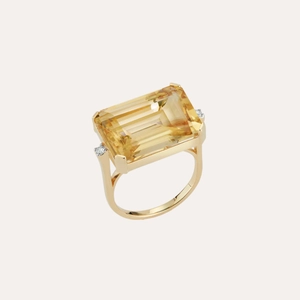
Candy Pop Diamond Ring
DetailsIntroducing the Candy Pop Diamond Ring - a modern twist on classic bling!…
0 reviews
Associated Organization showcase Only a few left -
Artdeco Style Enameled Cocktail Ring
DetailsIntroducing our Cocktail Ring Collection, featuring colorful stones in th…
0 reviews
Associated Organization showcase