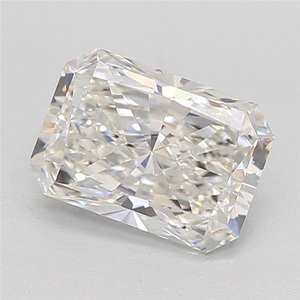
Insight: Will the diamond market recover?
Featured
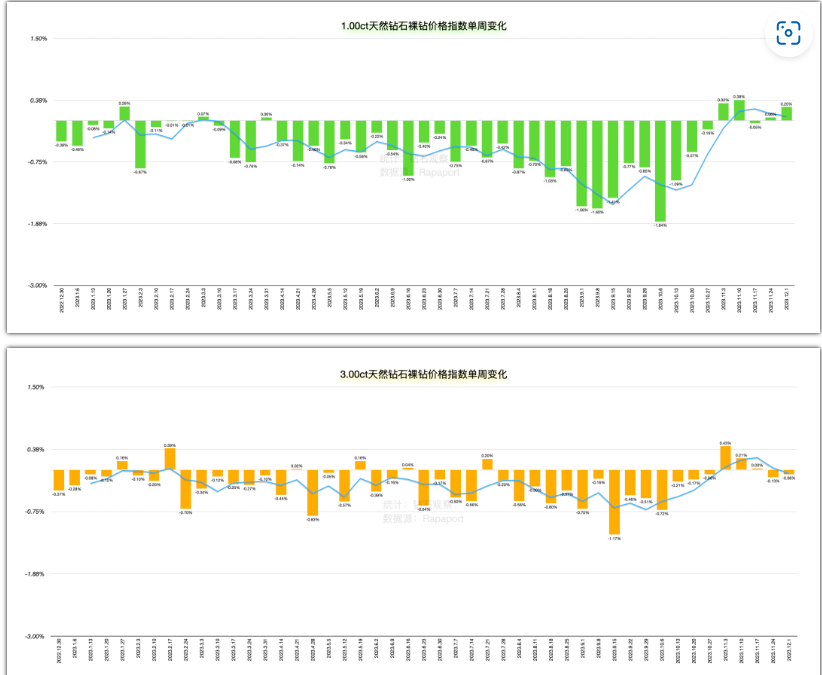
From the price performance of bare diamonds, November showed a relatively stable "bottoming out and stabilizing" state, with all four weight segments showing better performance in the last week of this month to some extent:
0.30ct:+0.46%
0.50ct:+0.41%
1.00 ct:+0.25%
3.00ct: -0.08%
Based on the performance in the past four weeks, the price indices of all four segments have shown a slight increase, as follows:
0.30ct:+0.60%
0.50ct:+1.49%
1.00 ct:+0.83%
3.00ct:+0.16%
Note: The above data is slightly higher than our monthly statistical results (+0.59%,+1.12%,+0.65%,+0.13%).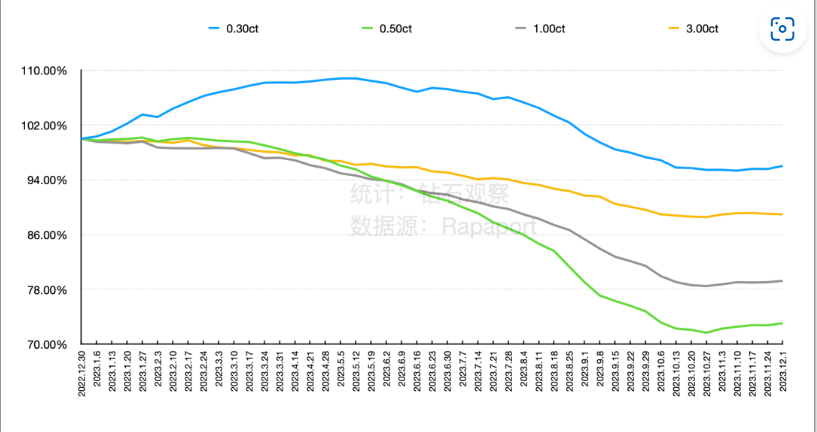
However, if we look at the curve from the beginning of this year to the present at a macro level, it is indeed true that the price indices of the four segments have stabilized (as shown in the figure below):
Does this mean that the market has started to recover? Perhaps this is just a "pause in decline"?
From the current situation, there are two main factors supporting the price of natural diamonds: 1) a decrease in raw material supply; 2) The performance of the holiday market at the end of the year. The former is artificially controlled, while the latter has a relatively small degree of control.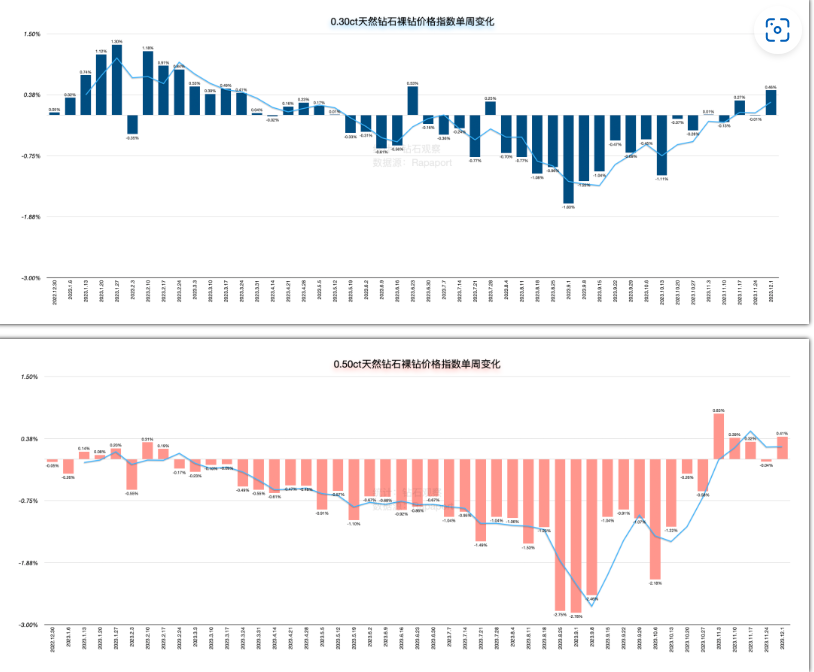
According to data released by the National Retail Federation (NRF), approximately 200 million consumers are shopping during Cyber Week, a record breaking figure that is 18 million more than the NRF's previous forecast.
In addition, during the period between Thanksgiving and online shopping week, the total number of people shopping online and offline increased by 2% compared to the same period last year, which is also a relatively positive signal.
However, these are all macro level data. If it specifically involves jewelry, especially in the diamond jewelry field, we need to wait for Signet to release its new Q1 financial report in December. Although Signet cannot represent the entire US jewelry market, its positioning at least reflects the attitude and inclination of the middle class towards jewelry consumption.
If the data performs well, it can basically lay the theoretical foundation for market recovery and predict that the midstream will purchase relatively more rough diamonds in January next year. At that time, the bare diamond inventory of downstream retailers has already been consumed to a certain extent, and coupled with the impact of India's previous suspension of raw material purchases, the natural diamond supply chain may be actively boosted.
The last edition of De Beers' goods viewing event this year is also an important symbol. The previous cycle's sales of as low as 80 million US dollars severely undermined the industry's confidence (although we all know that this was caused by sales policies aimed at helping midstream destocking). Whether December can effectively rebound is crucial for upstream enterprises.
By the way, according to IDEX's report the day before yesterday, the Indian factory has basically ended its 36 day holiday and will resume work gradually from November 27th. On November 30th, 50% of natural diamond processing plants resumed work, and almost all factories will resume work in the first week of December. Therefore, we should see the situation of purchasing soon.
On the other hand, Angola has officially started mining at the Luele mine (also known as Luaxe) (as we reported on our website three days ago), and it is estimated that the actual global production of raw materials next year will not be too low. Therefore, driving downstream demand is an urgent task.
In addition, the sanctions imposed by the West on Russian diamonds (note: according to Reuters, this scope of sanctions may spread to cultivated diamonds produced in Russia) will also have a restrictive effect on the supply of natural diamonds in local markets, and with the development of traceability technology, it may further support the price of bare diamonds. Although we have always opposed the intervention of political influence, as third-party observers, we acknowledge the existence of this factor at present.
In summary, while we see the rise of price indices, we still need to remain calm and not blindly link them to market recovery. After all, controlling supply artificially is just a means, and driving downstream markets is the real way to make the supply chain healthy.
As for the question of whether it will recover, we believe it will, after all, this industry has undergone more than a hundred years of honing and has strong resilience. Even though the actual recovery speed of the market is relatively slow, the probability of price stability within a certain period of time is relatively high - after all, the artificial control is already evident.