
Cultured Pearls – The Facts
Featured
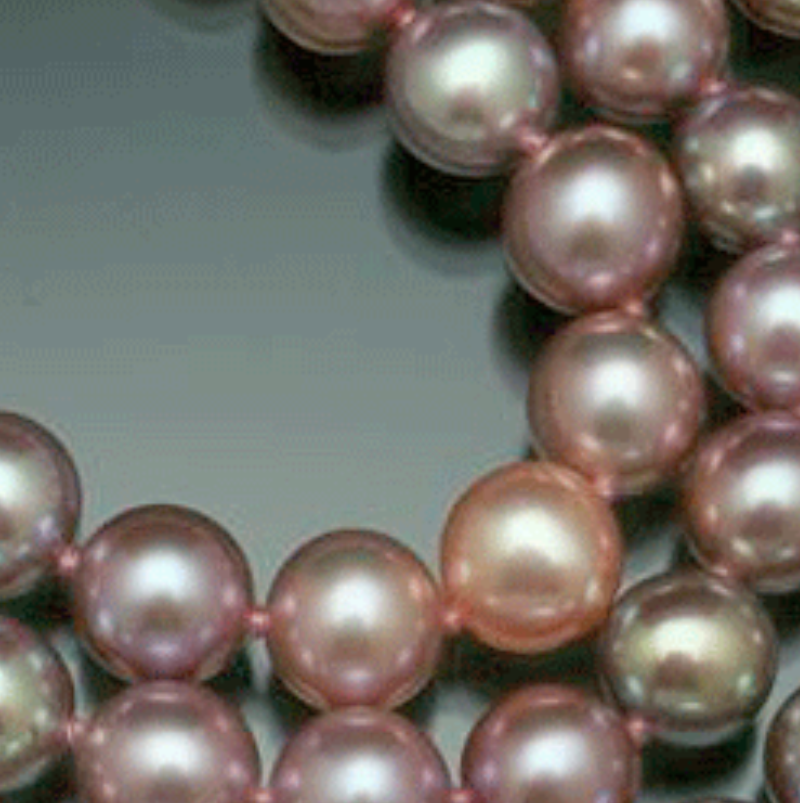
A cultured pearl is any pearl grown with the influence of human intervention.
Cultured Pearl Formation
A pearl is formed when a small irritant or parasite penetrates and lodges in the mantle tissue of a mollusk. In response, a substance called nacre is secreted, and the creation of a pearl begins. Nacre is a combination of crystalline and organic substances. The nacre builds up in layers, as it surrounds the irritant to protect the mollusk, and after a few years, this build up of nacre forms a pearl.
Natural Pearls vs. Cultured Pearls
Natural pearls, are pearls formed by chance. Cultured pearls have been given a helping hand by man. Today, nearly all pearls are cultured. By inserting a foreign object into a mollusk, pearl farmers can induce the creation of a pearl. From there, the same process of natural pearl creation takes place. The difference is that in this case, the inducement is intentional.
Cultured pearls can be distinguished from natural pearls through the use of x-rays, which reveal the inner part of the pearl.
The Early Days of Cultured Pearls
Modern-day cultured pearls are the result of discoveries made in the late 19th and early 20th centuries, by Japanese researchers Tatsuhei Mise, Tokishi Nishikawa, and the son of a noodle maker, Kokichi Mikimoto.
Although some cultures had long been able to artificially stimulate freshwater mollusks into producing a type of pearl, the pearls produced in this way were generally hemispherical mabes, rather than completely round pearls.
Finally, Producing Round Cultured Pearls
While early on in Mikimoto's career he focused on mabe production, he eventually produced rounds with a technique involving tissue and bead insertion into the gonad of an akoya mollusk. He patented this technique in 1916.
The Cultured Pearl Industry Is Born
This revolutionized the pearl industry because it allowed the reliable, consistent cultivation of large numbers of quality pearls. The cultured pearl industry of today was born. While natural pearls have widely varying shapes, sizes, and qualities, and are difficult to find, cultured pearls could now be "designed" round from the start. High quality, round pearls could now be produced by the millions; making them available and affordable to everyone.
Today's Cultured Pearl Industry
The development of pearl culturing took much of the chance, risk, and guesswork out of the pearl industry. It has allowed it to become stable and predictable, fostering rapid growth over the past 100 years.
Today, the cultured pearl industry has essentially replaced the natural pearl industry with production of cultured freshwater, South Sea, Tahitian, and of course Mikimoto's original akoya pearls.
Recommended products
-
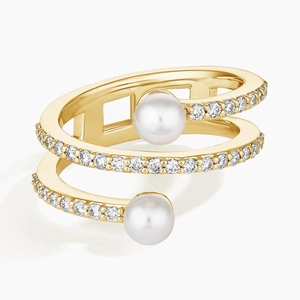
Cosima Cultured Pearl and Diamond Wrap Ring
Cosima Cultured Pearl and Diamond Wrap RingEffortlessly chic and equal…
0 reviews
Customization showcase -
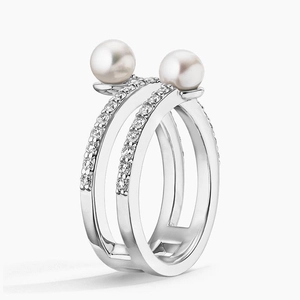
Cosima Cultured Pearl and Diamond Wrap Ring
Cosima Cultured Pearl and Diamond Wrap RingEffortlessly chic and equal…
0 reviews
Customization showcase -
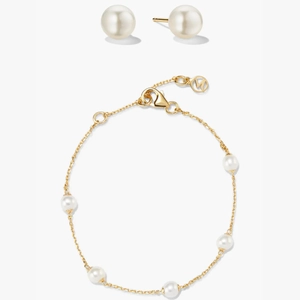
Pearl Play Bundle 5.0 $158 ($176 value)
Pearl Oversized StudsMaterial & Stone Options18k Gold Vermeil, PearlMini Pea…
0 reviews
Religious Jewelry Only a few left -
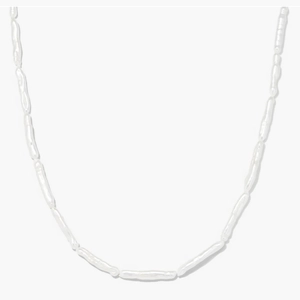
Phoebe Pearl Necklace Sterling Silver, Pearl
Meet the Phoebe Pearl Necklace—she’s unlike anything you’ve seen before. Made fr…
0 reviews
Special Especially Only a few left