What should be noted for circular bright cut diamonds
Featured
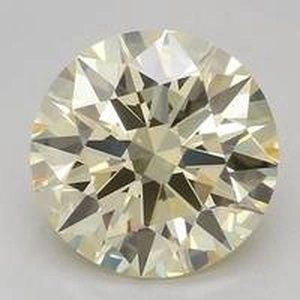
The arrangement of diamond facets is key to understanding how diamonds interact with light and the surrounding environment: imagine the facets of circular bright cut diamonds as a series of complex mirrors that can reflect light and reflect the environment. When purchasing diamonds, pay attention to the lighting environment you observe, as light also has a significant impact on the appearance of the diamond.
Pay attention to brightness (commonly referred to as bright light), which refers to all white light reflections inside and outside the diamond. Diffuse lighting is the best condition for observing brightness. Diamonds with good cutting are brighter than diamonds with poor cutting, even if they have no differences in size, color, and clarity. Poor polishing and symmetry can weaken brightness and color.
The diamond on the left is extremely bright. The diamond on the right is not as bright. Photography: Eric Welch/GIA
·Under the spotlight of the store, when you shake or tilt the diamond, you can see flashes of red, blue, yellow, or orange, which is called hues.
When white light passes through a diamond, it disperses into a rainbow like spectral color.
·Look for flicker - the point of light that flashes when a diamond, person, or light source moves.
·Pay attention to the bright and dark areas formed by the internal and external reflections of the diamond. You can see that the bright and dark areas of the diamond have sufficient contrast,
Thus forming a clear and sharp pattern of light and dark areas that do not dominate.
·Looking for flashes - the dual result of flickering and dimming modes. For a shining diamond,
The reflection of light should appear quite uniform and evenly sized.
The diamond on the left shows more sparkle and sparkle than the diamond on the right.
Photography: (Left) Al Gilbertson and BarakGreen/GIA
Photography: (right) Al Gilbertson and MahaTannous/GIA
Considering the robustness of diamonds: Although diamonds have a Mohs hardness of 10, they still exhibit notches or fractures.
·Do not choose diamonds with extremely thin waistlines or sharp edges, as these diamonds are more susceptible to damage.
·Considering the quantity, type, and distribution of diamond contents near the waist circumference, they may make the diamond more prone to chipping or fracture.
This diamond has an extremely thin waist, which is the middle part of the diamond, or the crown (top) and pavilion (bottom)
Separate narrow parts. This makes diamonds more susceptible to damage.