
There is no need to question whether cultivating diamonds is truly a diamond!
Featured
One of Ebooom's views on nurturing the diamond industry:
There is no need to question whether cultivating diamonds is truly a diamond!
Cultivating diamonds as' real diamonds' has also received official seals from authoritative institutions. The Federal Trade Commission (FTC) expanded the definition of diamonds in its 2018 Jewelry Guidelines. The original definition was released in 1956, stating that 'A diamond is a natural mineral composed primarily of pure carbon crystallized in the isometric system'. At that time, only natural diamond mining was available on the market. Now, the guide removes the term 'natural' from the definition of diamonds, and non natural cultivated diamonds have gained the 'legal' status. Diamond appraisal institutions, including GIA, HRD, IGI, etc., also issue exclusive ID cards for "cultivating diamonds".
Without the constraints of identity, Nurturing Diamonds still holds several good cards in their hands. Blood Diamond has torn apart the tip of the iceberg of 'Conflict Diamond', set in the context of diamond mining and sales in conflict zones in Africa being used to support anti government forces. To curb this issue, African countries have launched the Kimberley Process Certification Scheme (KPCS), and major brands have long recognized the moral risks brought by "conflict diamonds" and have explicitly stated no to such diamonds. The destruction of the environment is the original sin of diamond mining: the huge pits generated by mining are called the scars of the earth, causing huge damage to the natural environment of the mining site. On these two points, cultivating diamonds has natural advantages. The former goes without saying, while Diamond Foundry claims to use solar and wind energy in the laboratory and obtain zero carbon emission certification for the latter.
Price is another major advantage in cultivating diamonds. Compared to natural diamonds of the same level, the price of most cultivated diamonds is only about one-third of that of the former. Lightbox, a cultivated diamond brand under diamond giant De Beers, goes further and is priced only about one-fifth of that of natural diamonds. However, the emergence of nurturing diamonds does not bring diamond prices down the altar. The two are driving on different tracks: the former is a light luxury route, while the latter has a transcendent status.
Edison once said: In my laboratory, only pearls and diamonds cannot be manufactured. Cultivating pearls has already become the mainstream, can cultivating diamonds enter the fast lane? It is interesting that China, which is not interested in cultivating diamonds, precisely possesses leading technology and is also the largest producer of diamonds.
Recommended products
-
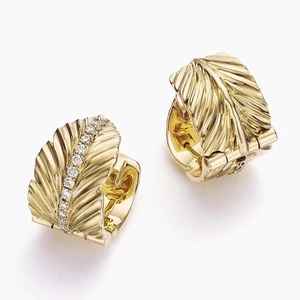
14K Yellow GoldJane Goodall Leaf Lab Diamond Huggie Earrings
0 reviews
Hot Sell -
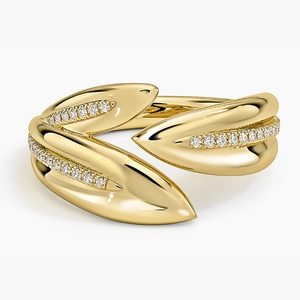
Jane Goodall Olive Branch Lab Diamond Ring (1/8 ct. tw.) in 14K Yellow Gold
0 reviews
Special Especially -
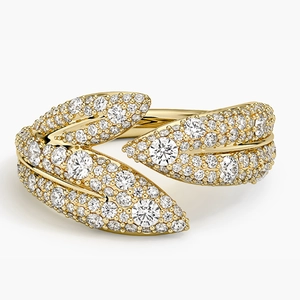
Jane Goodall Pavé Olive Branch Lab Diamond Ring (7/8 ct. tw.) in 14K Yellow Gold
0 reviews
Special Especially -
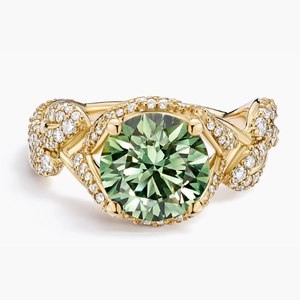
Jane Goodall Olive Branch Lab Diamond Cocktail Ring (3 3/4 ct. tw.) in 18K Yellow Gold
0 reviews
Special Especially