
Charles & Colvard Files for Bankruptcy, Citing Price Pressures
Featured
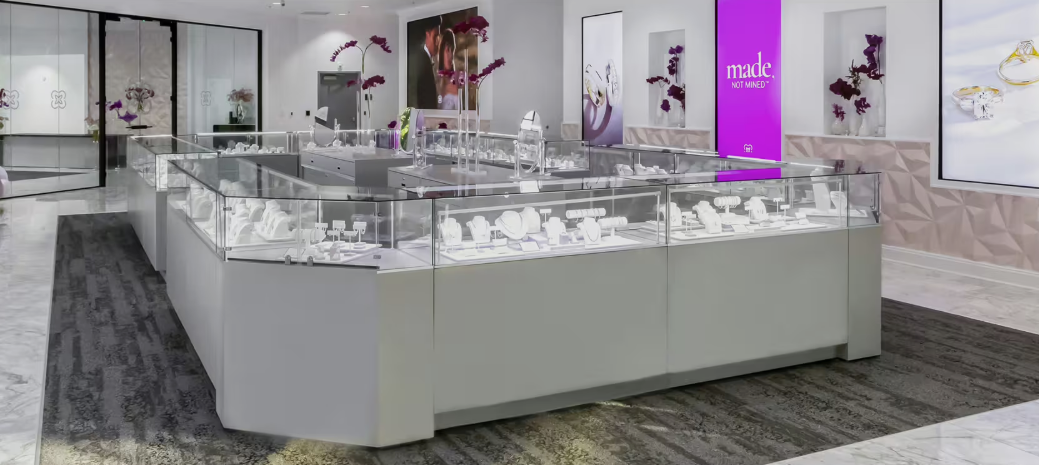
The Charles & Colvard showroom in Morrisville, North Carolina. The company, which sells moissanite as well as lab-grown diamonds, filed for bankruptcy this week.
Morrisville, N.C.—Moissanite maker Charles & Colvard, which has faced an ever-increasing amount of competition in the man-made gemstone space in recent years, has filed for Chapter 11 bankruptcy protection.
Based in Morrisville, North Carolina, part of the state’s tech-focused Research Triangle region, the company filed Tuesday in U.S. Bankruptcy Court for the Eastern District of North Carolina.
The company, which was founded 31 years ago, makes, markets, and distributes Charles & Colvard Created Moissanite, as well as Forever One, its higher end moissanite brand.
In September 2020, it expanded into lab-grown diamonds with its own brand, Caydia.
Charles & Colvard sells online, through retailers, and in 2022, opened its own store on its campus in Morrisville.
In an affidavit filed Tuesday, Executive Chairman of the Board Michael Levin stated that the company’s annual revenues totaled about $16 million in 2025.
That is down 27 percent when compared with 2024 ($22 million) and is half what the company pulled in in 2023 ($30 million), the company’s Form 10-K for FY 2024 shows.
Charles & Colvard has operated at a loss for the past three years (2025, 2024, and 2023) and continues to lose money in 2026.
In the affidavit, Levin elaborates on the factors that pushed the company into bankruptcy—falling lab-grown diamond and, subsequently, moissanite prices; skyrocketing precious metal prices; and increased competition from companies like Brilliant Earth and Blue Nile.
He wrote, “In the last decade, lab-grown diamonds and gemstones have transformed the diamond industry; consumers have shifted towards lab-grown diamonds and gemstones as a more affordable alternative to natural diamonds in fine jewelry and engagement rings.
“The market has seen a steep increase in consumer demand for lab-grown diamonds and gemstones; however, increasing saturation in the market of companies producing lab-grown diamonds and gemstones continues to drive down the value of these gems.”
Levin also mentioned inflation—which has hurt demand among lower- and middle-income consumers—and the financial and legal difficulties the company has faced, including being delisted from Nasdaq and its arbitration dispute with semiconductor manufacturer Wolfspeed Inc.
In effort to cut costs, the company laid off employees, reviewed and renegotiated vendor contracts, consolidated its supply chain, and switched to a more “cost-effective” freight partner in 2025.
In the months leading up to its early March bankruptcy filing, the company unsuccessfully tried to secure alternative financing.
Charles & Colvard started in 1995 as C3 Diamante Inc., later C3 Inc. It became Charles & Colvard Ltd. in 2000.
It currently has 26 employees, 25 full-time and one part-time.
It is run by Levin, who is executive chairman of the four-person board, and Chief Financial Officer Clint Pete. Former President and CEO Don O’Connell left in January and has not been replaced.
According to its bankruptcy petition, Charles & Colvard has $19.2 million in total assets, and $10.5 million in debt. Its creditors number between 100 and 199.
In a press release issued Tuesday, the company said it is looking to restructure to “better position the business for long-term success” and plans to use the Chapter 11 process as a tool to implement “broad changes.”
It is said its business operations would continue in the meantime without interruption.
“Charles & Colvard has a unique brand and product line, supported by superb employees and suppliers,” Levin said in the release.
“After thoroughly evaluating our alternatives and considering recent events and the market pressures facing our industry, the company’s board of directors decided that a court-supervised process is the best path forward to make the changes needed to ensure Charles & Colvard’s long-term success.”
Recommended products
-
1.91 Carat Cushion Lab Grown Diamond
About Ebooom:Discover the brilliance of lab-grown diamonds, a perfect blend of l…
0 reviews
Hot Sell DEFAULT -
Jane Goodall Olive Branch Lab Diamond Ring (1/8 ct. tw.) in 14K Yellow Gold
Ring DetailsInspired by the symbolic olive branch, this pavé ring features a uni…
0 reviews
Special Especially Only a few left DEFAULT -
Jane Goodall Pavé Olive Branch Lab Diamond Ring (7/8 ct. tw.) in 14K Yellow Gold
Ring DetailsInspired by the symbolic olive branch, this ring features a unique o…
0 reviews
Special Especially Only a few left DEFAULT -
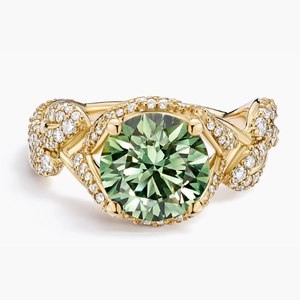
Jane Goodall Olive Branch Lab Diamond Cocktail Ring (3 3/4 ct. tw.) in 18K Yellow Gold
Ring DetailsInspired by the symbolic olive branch, this cocktail ring features a…
0 reviews
Special Especially Only a few left DEFAULT